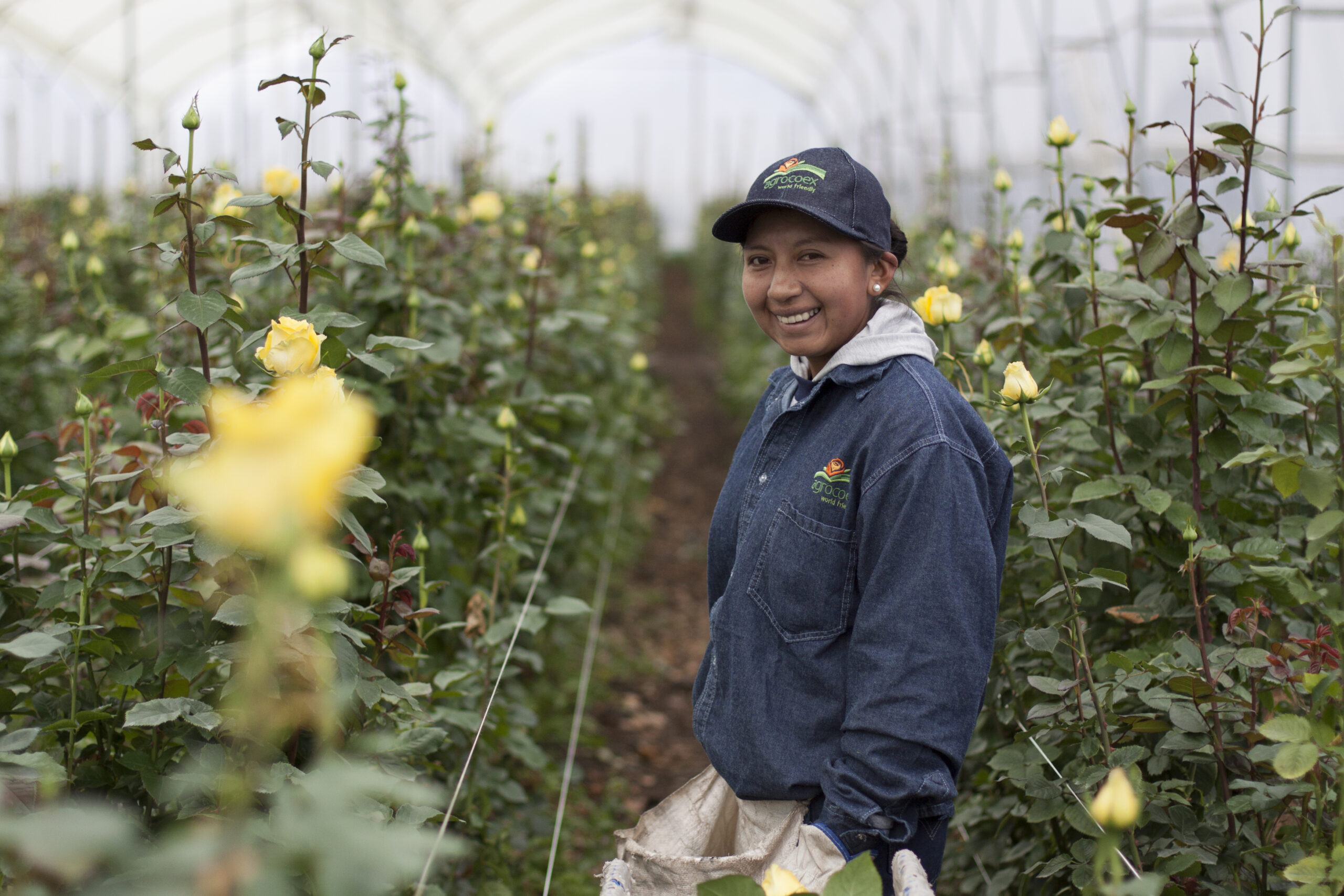
Maria Quishpe, from Saquisili, Equador harvests Fair Trade Certified roses.
How We Spend in an Affordability Crisis Matters
Roughly 95% of Americans believe that the United States (U.S.) is experiencing an affordability crisis: a stretch where the cost of everyday goods, especially food, housing, and utilities, outpaces what households bring home (Harris Poll). Many families are struggling with costs, too often having to make choices like putting sustainability considerations and other values-based options on the back burner. At Fair Trade Certified™, we recognize these challenges. Right now, we are seeing producers, consumers, and brands alike trying to meet the moment and balance their core values with their budgets. We are also experiencing proof that your dollars still carry weight. Every purchase is not only a small vote for the kind of global economy that you want to exist, it is also an investment. The affordability crisis is not one we in the U.S. are experiencing alone. When we choose products that treat the people who grow, harvest, and make them fairly, we stand in solidarity with the workers around the globe and together, building more resiliency for the future.
The Affordability Crisis in Numbers
This crisis did not happen overnight. Grocery prices jumped sharply in 2022, one of the steepest single-year increases in decades (USDA). Food-at-home prices kept climbing in 2024 and again in 2025, stacking on top of that earlier spike rather than reversing. It is not only food costs. In 2025, the nominal average residential retail price of electricity increased by more than twice the rate of inflation (CGEP). These increased costs tell a clear story: household budgets are stretched thinner than they were years ago. Because of that, shoppers are forced to make decisions with tight budgets that can limit choice and preference.
Balancing Values and Budget
We’re all navigating this moment together. For some, shopping fully in-line with your values is a weekly option, for others it is not. But, when you can make a values-driven choice, it counts. Impact and affordability can coexist; it just means identifying where your dollars can make the most impact and understanding how you can help improve the system.
Let’s clear up a myth: Fair Trade does not have to mean paying more. As consumer demand grew and market development expanded the number of Fair Trade Certified products on shelves, more retailers also added Fair Trade options to their private label lines. That competition has pushed pricing down in some areas of the grocery store. Twenty years ago, a bag of Fair Trade coffee meant spending $16. Now you can find certified coffee for as low as $4.99. The label doesn’t have to mean a premium price tag, and once you find your staple products, you can continue shopping with confidence.

How Fair Trade Certified Makes Impact
Fair Trade Certified is a standards-based system. Our organization audits producers, farms, factories, and fisheries against rigorous standards that require safe working conditions, environmental stewardship, and fair income for producers.
We work with producer organizations across more than 52 countries and multiple supply chains, including coffee, cocoa, produce, seafood, and apparel. So, the product in your digital cart or shopping cart in the aisle connects to a global network of farmers, workers, and fishers, not a single supplier in a single country. A Fair Trade purchase doesn’t have to replace your whole cart. It is a decision about which dollars can do the most good, one bag of coffee, one bar of chocolate, one carton of strawberries at a time.
Where the money goes
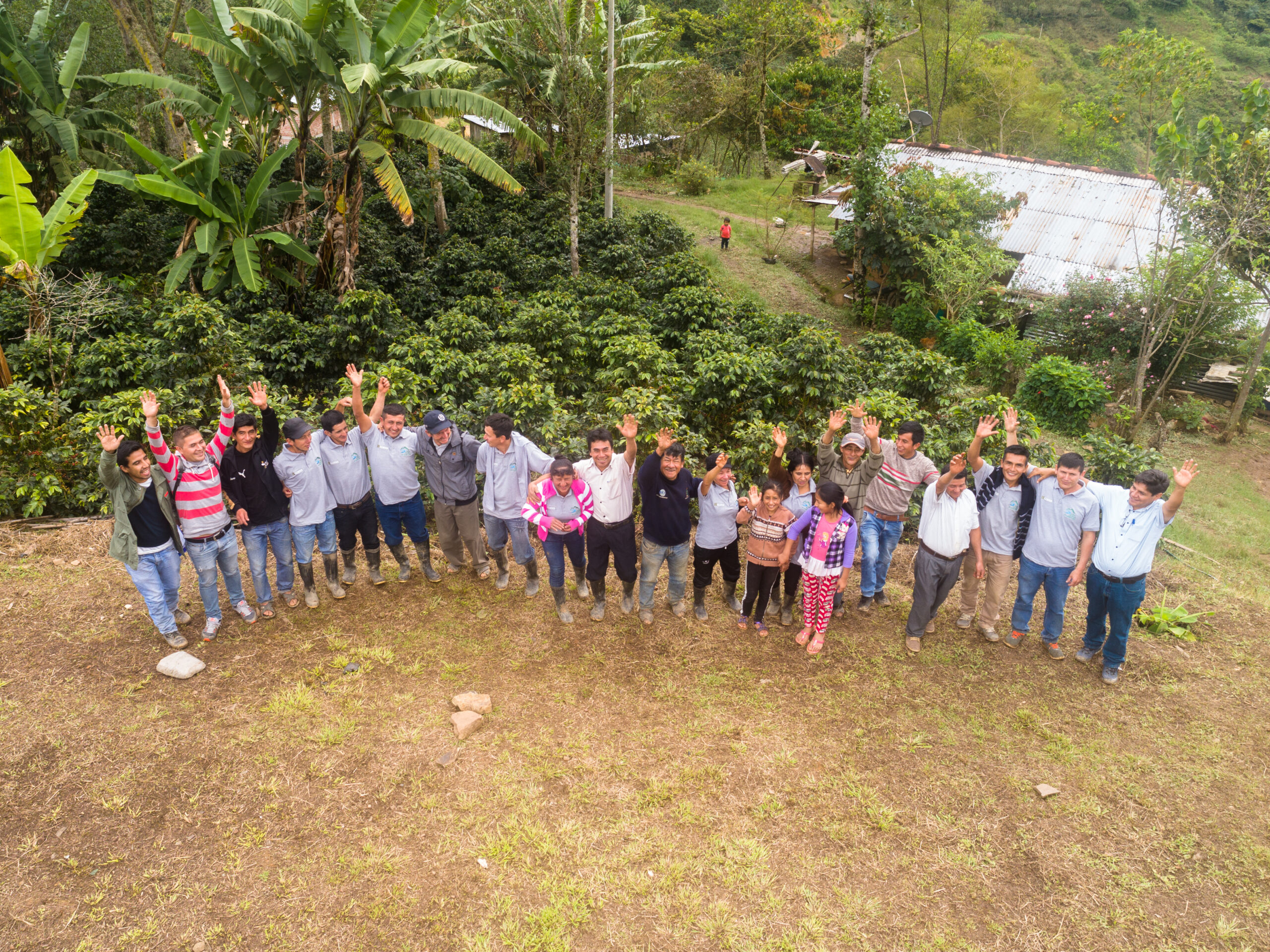
When you buy a Fair Trade Certified product, producers earn additional money that goes into a worker-controlled Community Development Fund. A democratically elected Fair Trade Committee proposes how to spend it, and the full group of Premium Participants votes on the plan. That process means the money goes toward what the community itself decides it needs, whether that’s a school, clean water infrastructure, or equipment that makes daily work safer.
Producer organizations directed more than $85 million in Community Development Funds last year, reaching 1.2 million farmers, workers, and fishers. Find more stats in our new Stories of Impact – Intelligence Hub.
Building Resilience with Smart Spending
When producers enter the market on steadier footing, with safer operations and stronger community infrastructure, the whole system runs more reliably. There are fewer disruptions, market shocks, and overall steadier supply chains. This builds long-term resilience and can improve markets, improving affordability for producers, consumers, and brands.
What you can do
You don’t need to overhaul your entire shopping cart, just make what you already buy count. Here’s how:
- Look for the Fair Trade Certified label on products you already buy.
- Swap in one or two everyday items, not your entire list.
- Remember that even occasional purchases send real money to producer communities. Consistency helps, but it isn’t required for impact.
Purchases have power
How you spend matters, especially now. When every dollar has to work harder, we have an opportunity to make them work better for you and the producers who harvested, processed, and crafted what you buy. This strengthens the global economy and helps reset a foundation that can help improve this situation for all of us Fair Trade Certified gives you a way to make a handful of those dollars count for someone on the other end of the supply chain, without asking you to rebuild your entire budget around it. This Fair Trade Month, look for the label. It’s a small investment with real impact.